he clip runs under a minute. Messi sits in a dim room and walks through the 2022 World Cup final almost frame by frame — the 2-0 lead, the French comeback。the shot Kylian Mbappe dragged past Emiliano Martinez, the extra-time goal he believed had settled everything. What stands out is the tone. No triumph, no theatre, just a man describing traffic he has already driven through. Messi's commentary has always worked like that, arriving late and unhurried, as if analysis were a chore he agreed to finish before bed. He does not perform reflection. He reports it, then stops.That scarcity is the whole story. Most elite players talk every week — mixed zones, club channels, podcasts, branded sit-downs with a sponsor logo in the background. Messi's commentary has been rationed for two decades。partly by temperament, partly by design. He gives you six sentences in Spanish after a Champions League night and disappears down the tunnel. When he does explain something specific, the football world treats it like a declassified document: how Argentina's midfield rotated against Croatia, why he kept drifting into the left half-space, what he saw in the goalkeeper's positioning before the free kick. Teammates say the same thing in private — he sees the game two passes ahead and says almost none of it out loud. Which makes any spoken explanation from him worth more than the volume of noise around him.
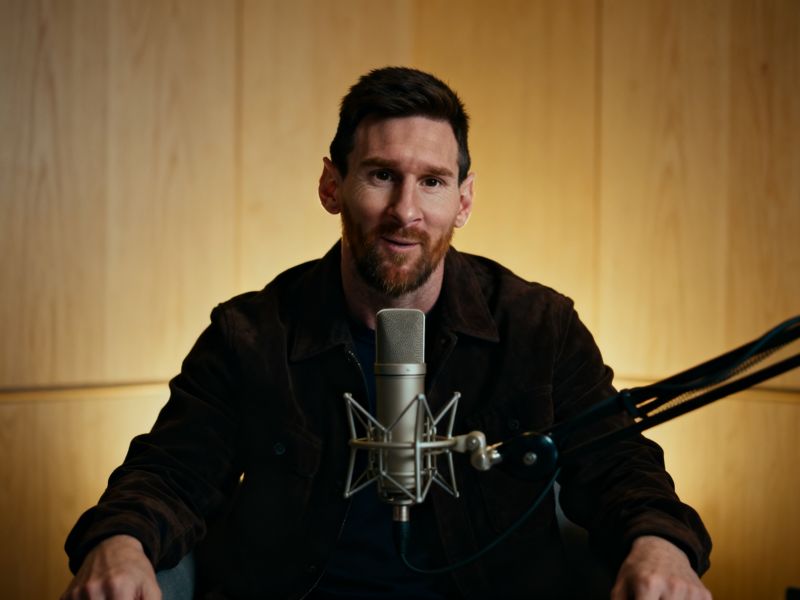
There is a strange inversion here. Broadcasters have built entire careers on commentary about Messi — the crescendos, the metaphors, Peter Drury reaching for poetry, Ray Hudson abandoning language altogether. Meanwhile Messi's commentary itself stays flat, almost bureaucratic. We suffered. It was difficult. The group deserved this. Sentence after sentence of understatement。delivered in a monotone that would fail an audition for a highlight reel. And that flatness is exactly why it lands. When everyone around you is screaming, the quiet guy describing what actually happened becomes the only reliable narrator in the room. I have watched dozens of his post-match interviews and I can count on one hand the times he raised his voice. He raised it in 2014 in Rio, and again in 2021 at the Copa America, and both times the words barely mattered next to the face.Miami shifted the register slightly. In Florida he speaks more, at least by his own standards, talking about adapting to MLS, the heat。his children settling into school, the strangeness of being a tourist attraction in his own workplace. Anyone expecting Messi's commentary to turn confessional will be disappointed, but there is a new reflective edge to it. After the 2024 Copa America final, he sat on the bench in tears with an ankle swollen beyond recognition, and afterwards offered a handful of sentences about age and timing that said more about mortality than any long-form profile could. He has also grown more willing to address the ending, the 2026 question, whether his body still agrees with his ambition. He does not promise anything. He just tells you where he stands.Why does any of this matter beyond the archive of quotes?Because Messi's commentary functions as a decoding layer for his own game. A single remark from him — that the match got long, that his legs felt heavy in the seventieth minute。that the pitch slowed the ball — does more analytical work than ten minutes of studio punditry. He treats language the way he treats a pass: only when it is needed, only if it moves the play forward. That restraint is the reason people lean in. Any athlete can give you an hour of words. Very few can give you thirty seconds that change how a tournament, a season, or a career reads. Messi's commentary is not a product he sells. It is a favour he occasionally grants, and the sport has learned to wait for it.