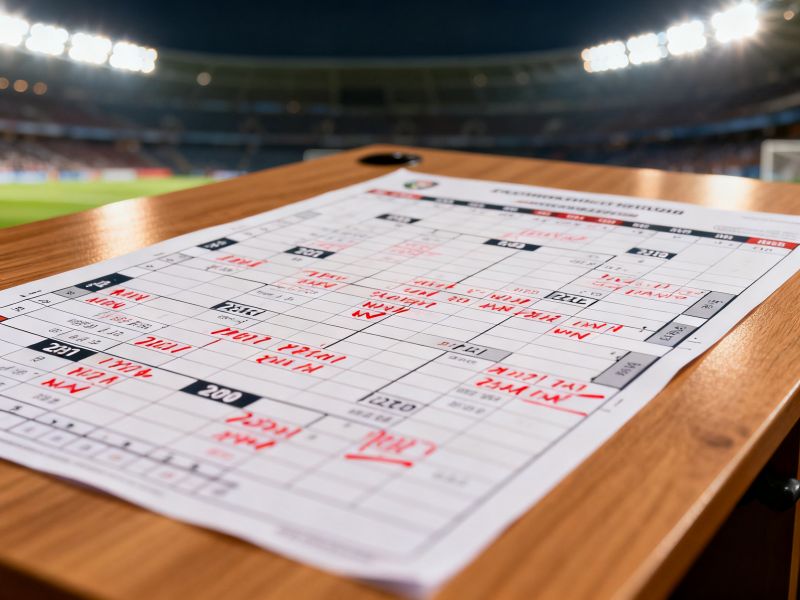
he hot football program schedule isn't just a list of dates—it's a living document that shapes a team's entire season. Coaches obsess over it. Fans circle games months in advance. Athletic directors tweak it like a puzzle. Take the University of Georgia's 2024 slate: a season opener against Clemson in Atlanta, followed by a brutal stretch of SEC road trips to Alabama and Texas. That's not random. It's designed to test depth early and keep the team battle-tested by November. A hot football program schedule often front-loads challenges, forcing young players to grow up fast or get exposed.What makes a schedule truly 'hot'?It's a mix of marquee matchups, rivalry games。and strategic bye weeks. Look at Oregon's 2024 draw—a trip to Michigan in September, a home date with Ohio State in October, and a late-season clash with Washington. The Ducks' staff spent two years negotiating that sequence, ensuring a bye before the Ohio State game and avoiding back-to-back road trips. I've seen programs hand over scheduling duties to a single assistant coach who treats it like a chess match. One Power Five analyst told me his job is '90% logistics, 10% psychology.' You schedule a bye before a rival, you schedule a cupcake after a physical game. It's not glamorous, but it wins games.Fans feel the rhythm of a hot football program schedule differently. For Alabama, the Third Saturday in October against Tennessee is non-negotiable. For Texas, the Red River Showdown sits right in the middle of the season—a neutral-site chaos factory. These fixed points create anticipation. Yet athletic departments also chase TV money. Moving a game to a Thursday night or a Friday allows a program to own the national spotlight, but it disrupts campus life and recruiting visits. I remember talking to a Mississippi State booster who grumbled about a midweek game: 'It's great for exposure。
terrible for tailgating.' That tension between tradition and revenue never goes away.Recruiting cycles now hinge on schedule releases. When a hot football program schedule drops in January, graphics teams flood social media with 'Official Visit' weekends. A recruit wants to see a packed stadium against a rival. Coaches use the schedule as a sales pitch: 'You'll play in The Horseshoe in September and at The Swamp in November.' That's tangible. I've watched a four-star receiver commit to LSU largely because the staff showed him a highlight reel of night games in Death Valley—and pointed out that the 2024 schedule included three home night games in the first five weeks. The schedule itself becomes a recruiting tool, not just a logistical plan.The hidden danger?A hot football program schedule can turn toxic if a team stumbles. Three straight road games against ranked opponents can derail a season by October. That's why some programs now schedule a 'breather' game in late September, even if it means paying a Group of Five team $1.5 million. Call it insurance. The best schedulers balance ambition with survival. They know that a September loss to a blue blood is forgivable;
a September loss to a directional school is not. The schedule doesn't win championships, but a poorly built one can lose them before the leaves change color.